
KREEDA is the treadmill brand of Ningbo Kangruida Sports Equipment Co., Ltd. Our factory is located at No. 998, Tonghui Road, Qianjiang, Jiangbei District, Ningbo, Zhejiang 315033, China. We manufacture treadmills and walking pads for distributors, importers, wholesalers and fitness brands, and we supply both under our own KREEDA label and under OEM/ODM private label.
This page is written for B2B buyers: it explains what we make, how we work with overseas partners, and exactly what to send us so we can quote your project.
Factory overview: what this site controls
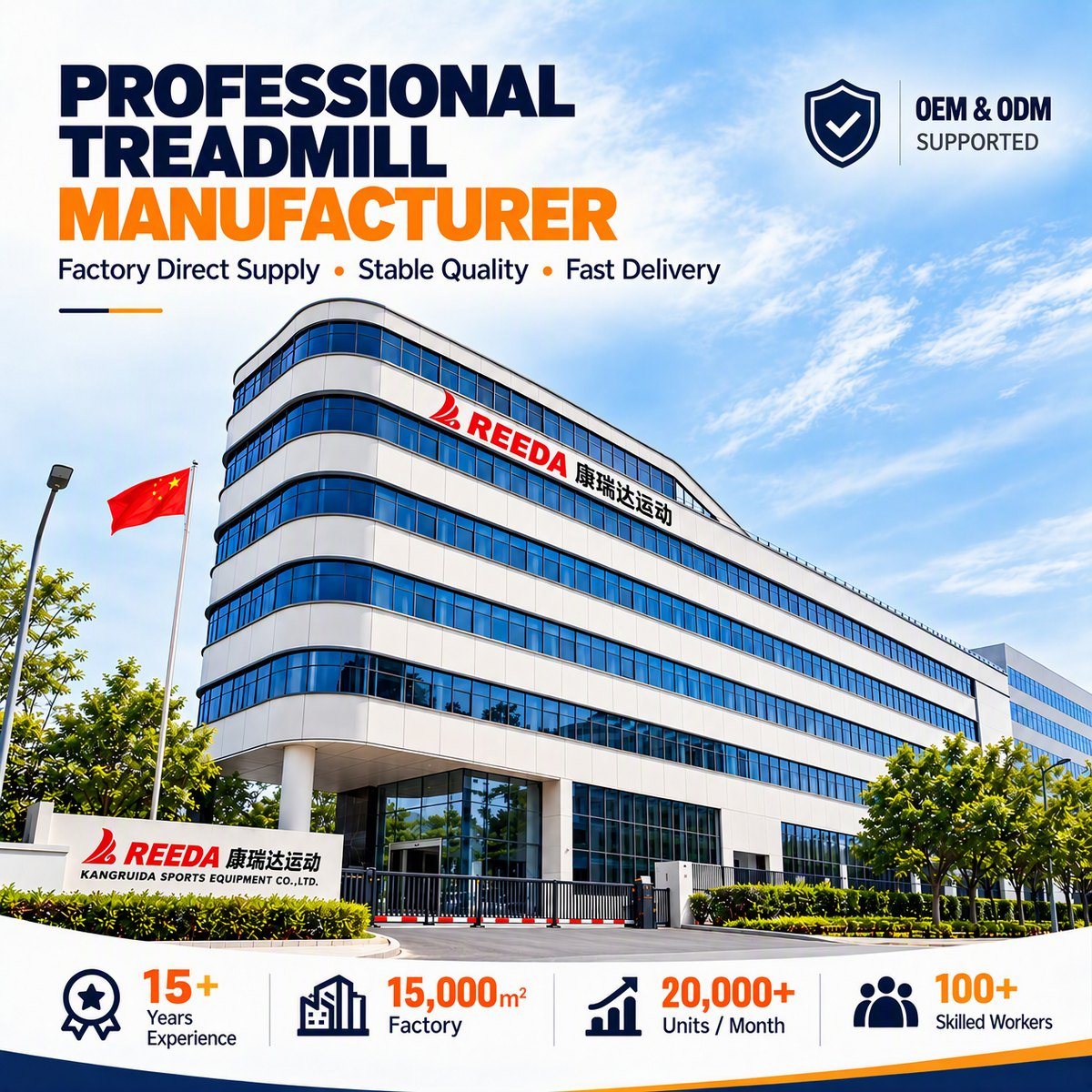
A buyer is choosing a repeatable process, not a catalogue page: what matters is what the site controls itself and how it proves consistency unit to unit.
Treadmill manufacturing normally runs through five stages: frame fabrication, drive assembly, electronics, belt and deck assembly, and final assembly with testing and packing. Ask for the process flow for the model family you are quoting.
KREEDA states publicly that it operates an ISO9001:2015 quality management system, applies FMEA risk control, and has passed Walmart and BSCI factory audits.
What we manufacture
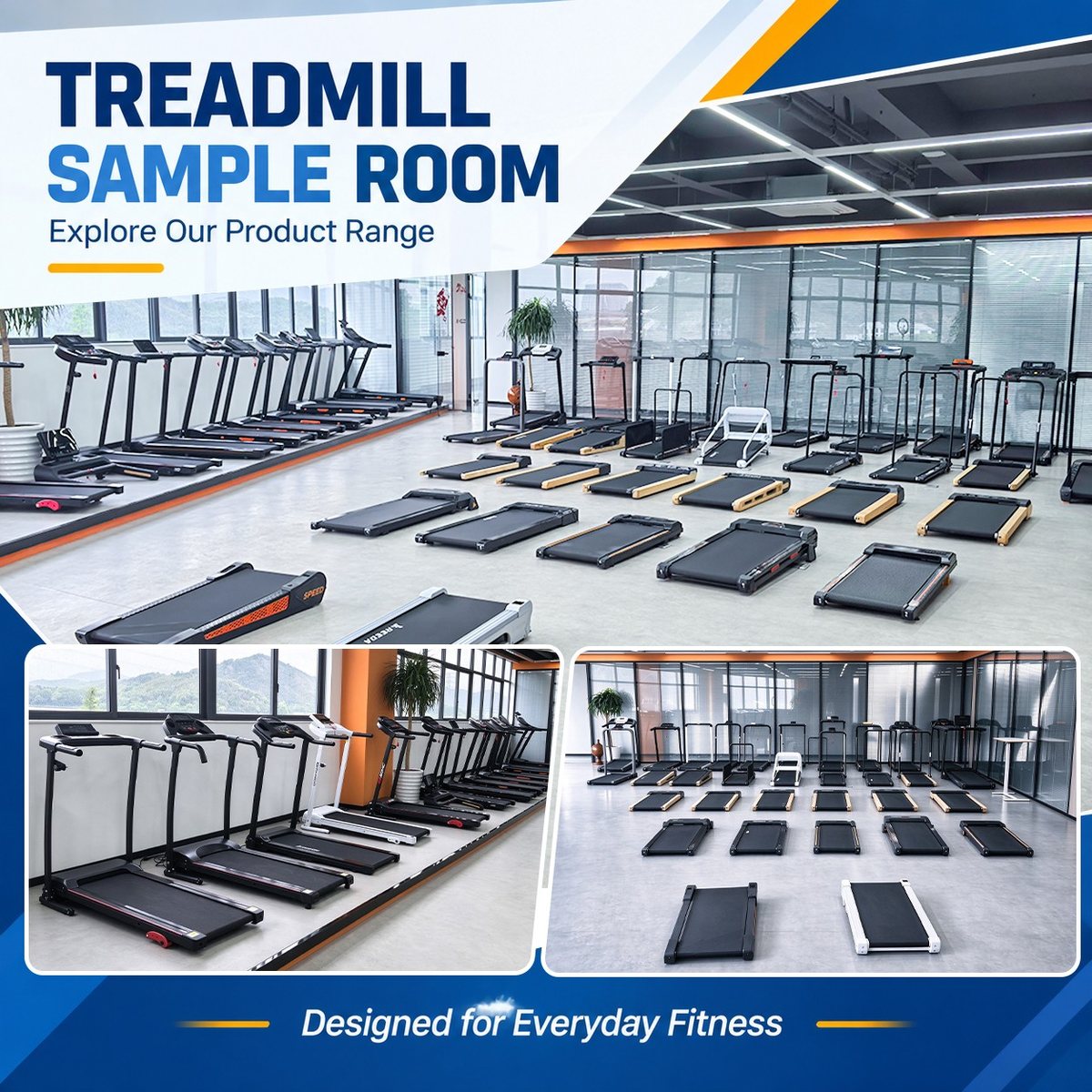
We build seven product families. Each one has its own page on this site with the models currently in production:
- Home treadmills — the main category, covering compact and full-size residential models.
- Walking pads — flat, low-speed walking machines for home and office use.
- 2-in-1 treadmill desks — walking pads that convert into a standing desk workstation.
- Office treadmills — quiet models intended for workplace and light commercial use.
- Foldable treadmills — models designed for compact storage and smaller living spaces.
- Pet treadmills — machines built for veterinary and animal conditioning use.
- Senior treadmills — low-speed models for assisted walking and rehabilitation training.
The full current catalogue is on the treadmill products page.
The manufacturing process, step by step
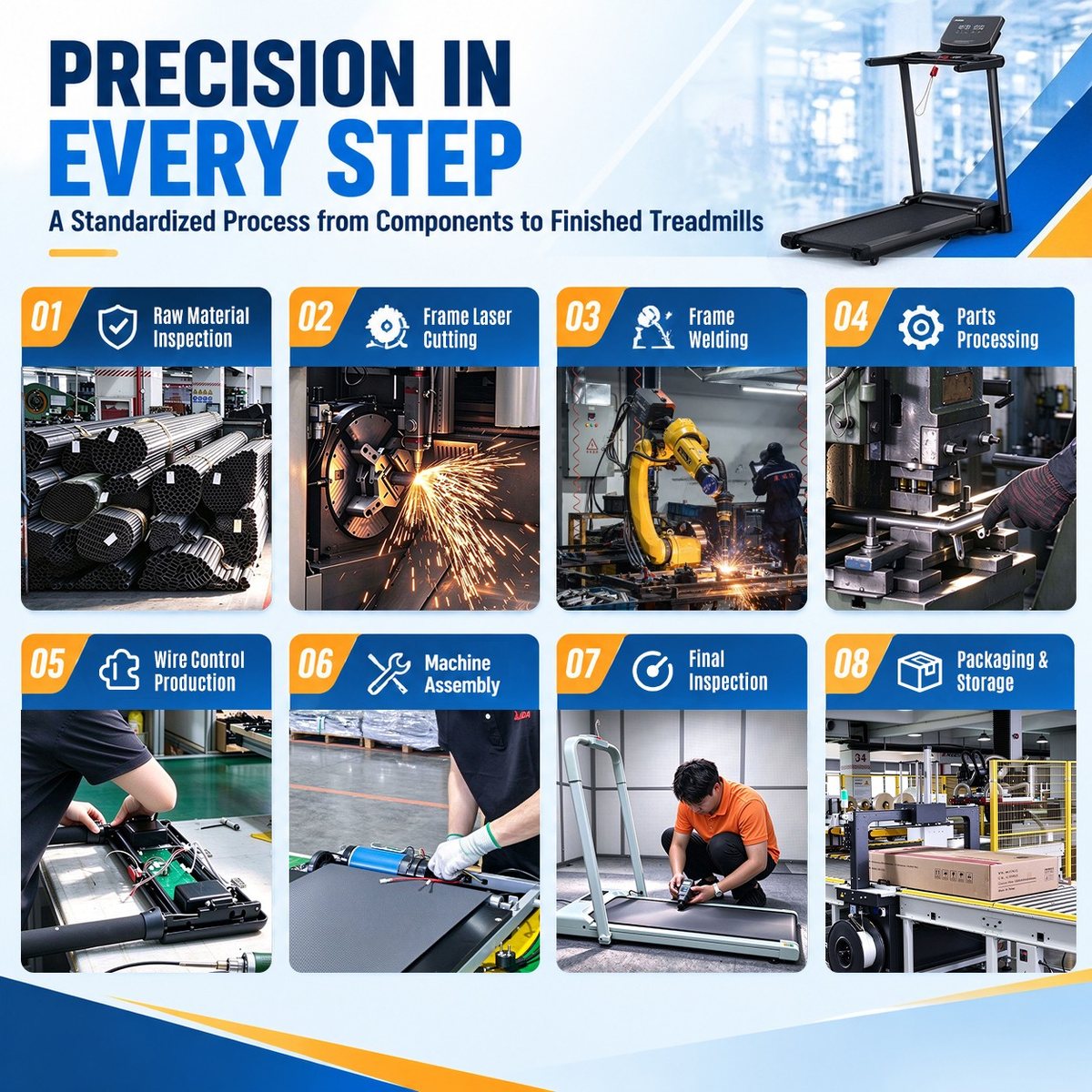
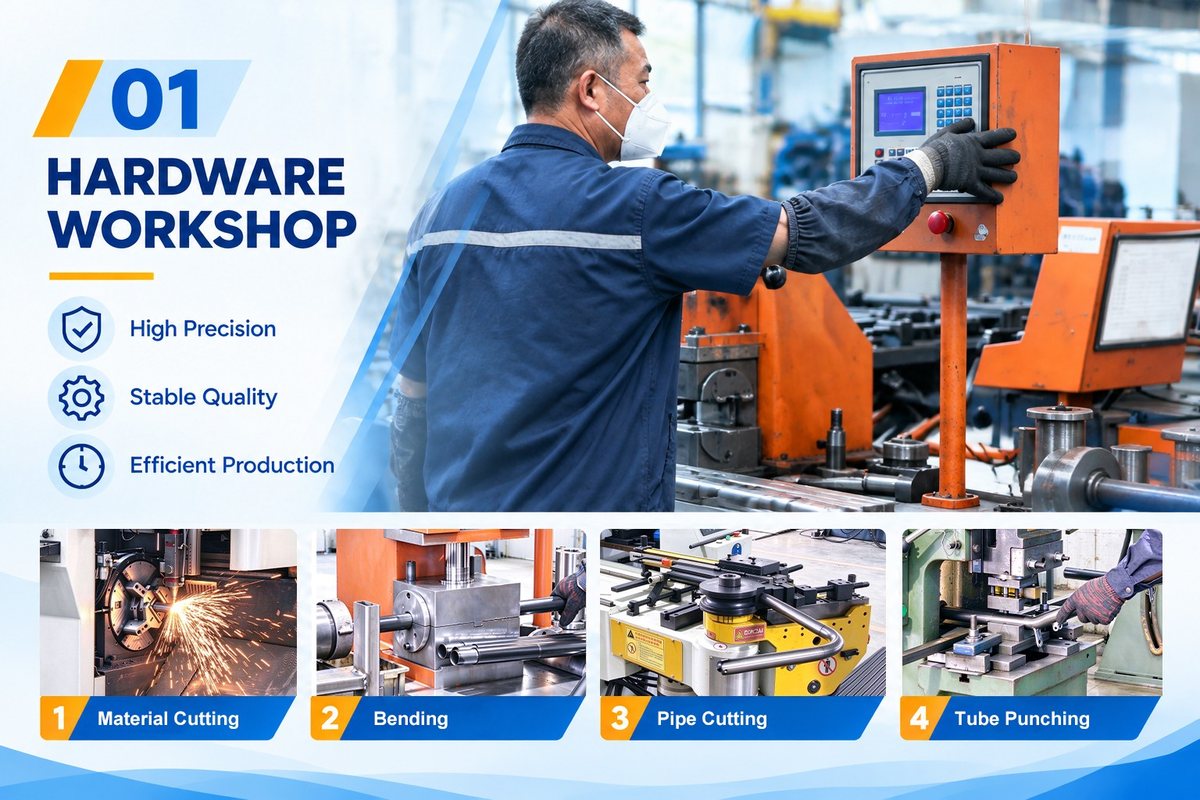
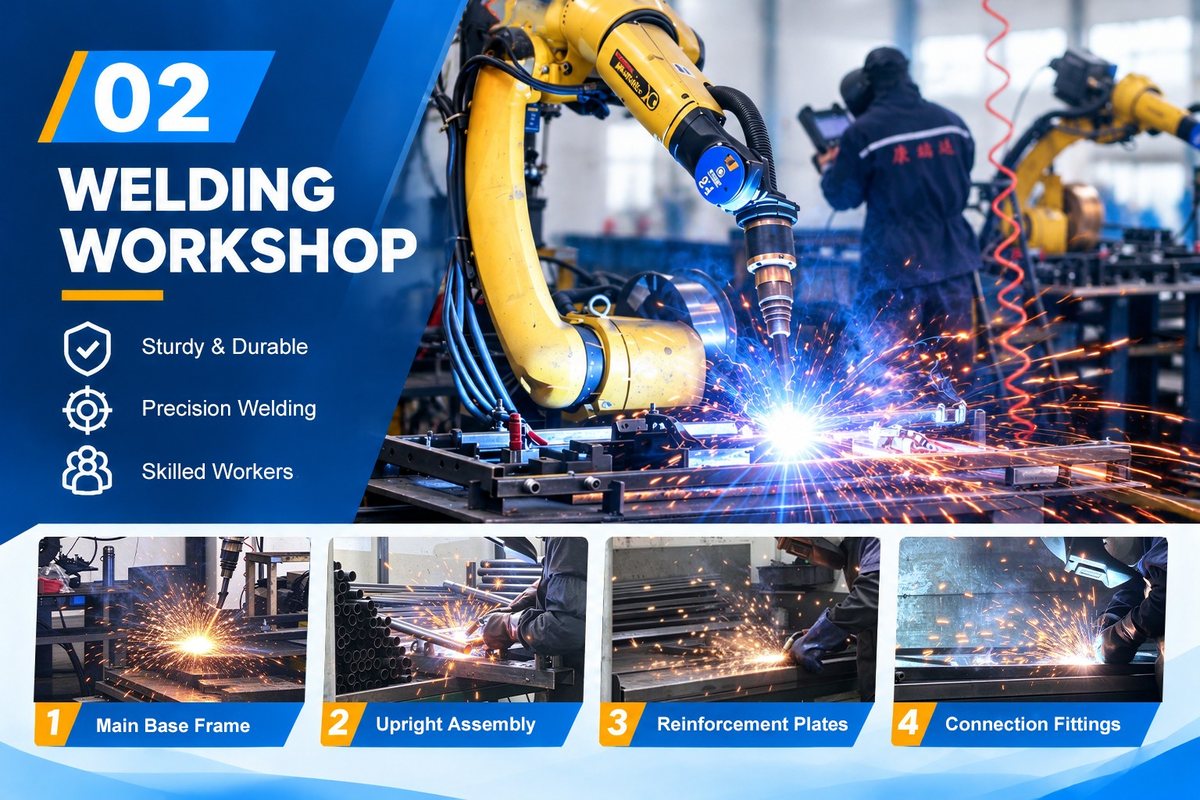
- Frame fabrication and finishing. Tube is cut, bent and welded into base frame and uprights, then coated. Check weld quality on load-bearing joints and frame geometry after coating.
- Drive assembly. Motor, transmission, rollers and flywheel are mounted and the belt tensioned. Check mounting torque, roller parallelism and belt tracking across the speed range.
- Electronics and controls. Controller, harness, console, speed sensor and safety key are fitted and firmware set. Check the firmware version recorded against the batch.
- Belt and deck. Deck board, anti-friction layer and belt are aligned, lubricated and tensioned. Check belt centring, deck fixings and lubrication dose.
- Final assembly. Uprights, handles, console mast and motor cover are fitted, plus the folding mechanism on folding models. Check fastener torque and fold cycles.
- Testing and packing. Function, electrical safety and load tests, then packing and transit checks. Ask which tests applied to your units.
Assembly: what happens at the line
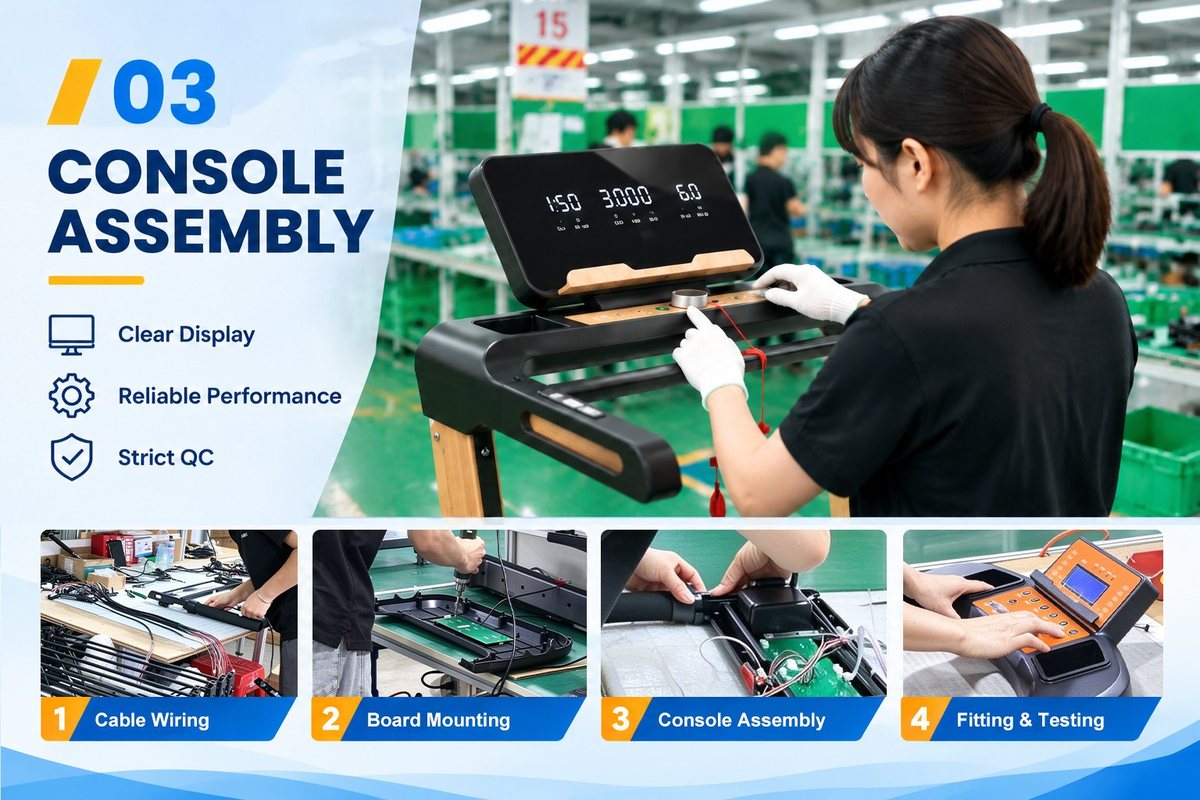
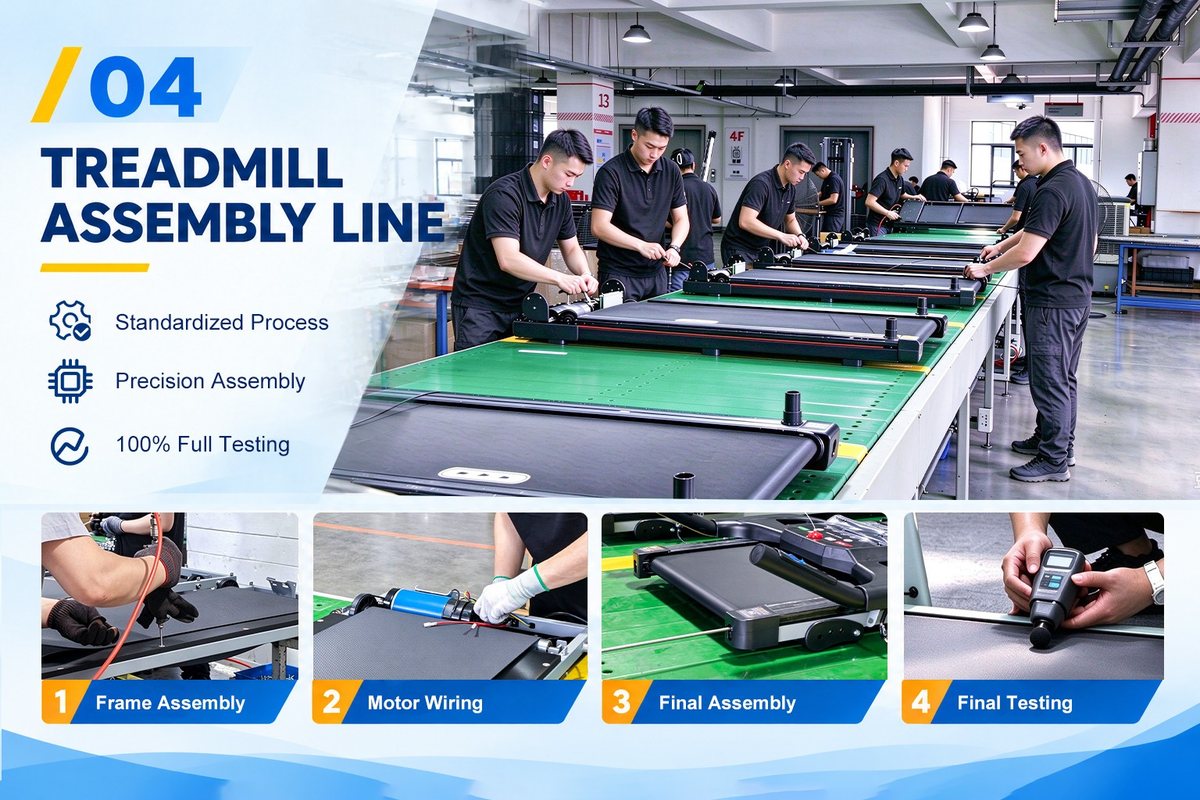
Assembly is where repeatable defects appear: cross-threaded fasteners, trapped wiring, under-torqued deck fixings, and belt tracking that is correct at walking speed but not when running.
Two controls prevent most: a workstation instruction carrying the torque values with a calibrated tool at the station, and a first-article check at every lot change.
Incoming quality control
Incoming inspection is the lowest-cost place to stop a defect: a fault found on receipt is contained by rejecting the lot, while the same fault found later becomes rework or a field return.
| Component group | Checked on receipt | Rejection triggers |
|---|---|---|
| Motor and drive | Rating and dimensions against the approved sample, no-load current | Dimensions or rating off the sample; abnormal current |
| Controller and harness | Board revision, firmware version, connector fit, insulation, earth conductor | Wrong revision or firmware; undersized earth conductor |
| Frame tube and welds | Wall thickness, section size, weld penetration, straightness, insert threads | Cracks or porosity in a load-bearing weld; threads that reject the fastener |
| Belt and deck | Belt dimensions and splice, deck flatness, anti-friction layer bond | Splice off square; delamination; dimensions outside tolerance |
| Console and safety key | Display and keypad function, sensor output, key retention | Sensor output outside range; key that does not cut power |
| Fasteners and packaging | Bolt grade and coating; carton grade, foam thickness, barcode, manual language | Ungraded fasteners in load-bearing joints; artwork or language mismatch |
An incoming routine needs three things: a written specification per component, a record for every lot received, and a defined reaction to a failed lot. ask for the record of a rejected lot and the correction that followed.
In-process quality control
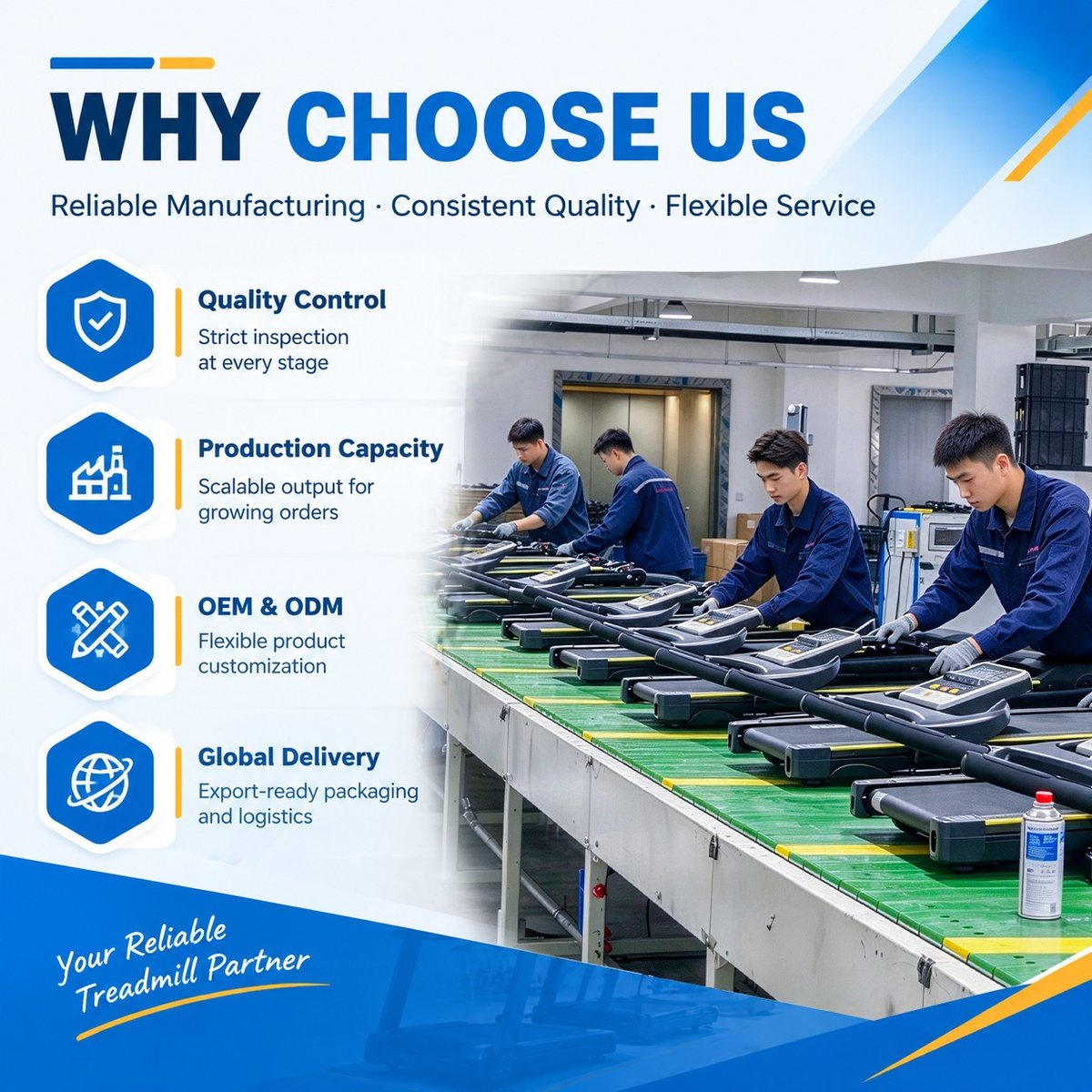
In-process control runs between stations, while the unit is accessible and rework is cheap: at final inspection, an under-torqued deck fixing and a mis-routed harness look identical to a correct build.
| Stage | Checkpoint on the line | Record |
|---|---|---|
| Frame fabrication | Weld quality and frame geometry on the first piece of each batch, then at frequency | First-article report and welder’s check sheet |
| Coating | Coating thickness and adhesion, coverage at edges and tube joints | Coating record with instrument readings |
| Drive assembly | Motor mounting torque, roller parallelism, belt tension | Torque check with a calibrated tool, by batch and operator |
| Electronics | Wiring and routing, earth continuity, safety-key cut-off, firmware version | Firmware version for the batch; continuity and cut-off results |
| Belt and deck | Belt centring across the speed range, deck fixings, lubrication | Tracking check at low and high speed; lubrication dose record |
| Function test and packing | Speed accuracy, emergency stop, insulation; carton contents | Test record per unit or batch; packing record and signed loading plan |
check the control plan’s checkpoints against the sheets hanging at the stations.
Final inspection before packing
Final inspection is the last gate before the carton is closed, and the last point at which a defect is corrected at factory cost rather than yours.
What is checked. Cosmetics and labeling; function across the speed and incline range; emergency stop and safety-key cut-off; belt centring; noise; fastener torque; electrical safety; console speed against a reference; accessory completeness; carton markings.
The acceptance basis. Agree two layers in writing before production: the safety standard the model is tested against, and the sampling plan — sample size, defect classes, and the reaction when a class is exceeded. specify zero acceptance for safety-related defects.
ISO 20957-1 gives general safety requirements and test methods for stationary training equipment; ISO 20957-6 adds the treadmill-specific requirements (source: ISO). Ask which edition a supplier tests against.
if you cannot attend the pre-shipment inspection, appoint a third-party agency and give it your defect definitions; the walking pad quality control checklist covers compact machines.
Testing capability: the rigs a competent factory needs
A machine list is easy to print. What matters is whether the rigs are calibrated, used in production and recorded against a batch.
| Test area | What the rig proves | Evidence to request |
|---|---|---|
| Endurance or load bench | Extended running under a loaded belt without overheating or speed loss | Report giving load, duration, ambient condition and serial number |
| Motor bench or dynamometer | Continuous output, current draw and temperature rise against the label rating | Motor report with measured figures against the rating |
| Controller and firmware check | Speed accuracy, soft-start, over-current protection, safety-key cut-off | Test protocol, results and the firmware version tested |
| Electrical safety instrument | Earth continuity, insulation resistance and dielectric strength | Readings per unit or batch, plus calibration certificate |
| Noise measurement | Sound pressure at a defined distance, load and speed | Method, meter used, and ambient background level |
| Packaging and transit test | The carton survives drop, compression and incline impact | Protocol, drop height, orientations and unit condition after |
Ask for the current list of in-house test rigs and instruments together with their calibration status and calibration interval, and treat any rig without a current calibration label as unverified.
check for a valid calibration label on the torque wrench, tachometer and safety tester — the fastest ten-second check in an audit.
Traceability: how a buyer follows a unit back
Traceability sets the size of every future problem: a defect traced to a batch and its component lots is confined to the units affected, while a trace that stops at the production month makes every field issue a whole-container issue.
- Read the serial number or batch code from the unit and its carton.
- Convert that code into a production batch and date.
- Identify the component lots used: motor, controller, deck, belt, power supply.
- Retrieve the incoming inspection records and supplier certificates for those lots.
- Retrieve the in-process and final inspection records for the batch.
- Match the batch to the packing record and the shipment it left on.
Ask how a unit is traced back to a production batch and date, what the batch and date code format is, and how long production, inspection and packing records are retained. A supplier who cannot describe that chain in this order does not have one.
Packaging

Packaging is the last quality stage and the first thing your customer sees; the predictable failure modes are crushed corners at the console end, impact damage to the motor housing, and moisture at the deck. Specify rather than assume: carton board grade and print against approved artwork; foam at known impact points; a lock that stops a folding model opening; carton weight and stacking strength; and manual language.
Ask which transit-test protocol is applied to master cartons, what the pass criteria are, and what unit condition was recorded after the test.
Audit evidence: what you can request, and how you verify it
An auditable factory keeps a document pack ready; this table lists what to request and how to check it.
| Request | What it demonstrates | How to verify it |
|---|---|---|
| Business licence and scope | The legal entity, and that manufacture sits inside its scope | Match the entity name to the quotation, invoice and bank details |
| ISO 9001 certificate | That a quality system is certified for a defined scope | Check the number with the issuing body and confirm expiry |
| Walmart and BSCI audit documentation | That third-party factory and social audits were passed | Ask for the report date and corrective action plan, not the score |
| Control plan and FMEA extract | That checkpoints, frequencies and reaction plans are defined | Compare with the sheets at the stations; check revision date |
| Inspection and calibration records | That the plan ran on your production with sound instruments | Ask for records carrying your batch number; match instrument labels |
| Safety test reports and loading plan | That the model was tested for your market and the shipment built to plan | Match model, laboratory, date and standard edition |
Buyers who want the full method can work from the guide to auditing a treadmill factory in China, and ask us for the same documents.
How we work with wholesale and OEM buyers
We do not run an online checkout. Every order is quoted against a configuration, because motor rating, deck size, folding mechanism, console, packaging and documentation all change the cost. The normal sequence is:
- You send the requirement. Target market, product category, quantity, branding needs and any certification documents your market requires.
- We propose models or a custom configuration. Either an existing KREEDA model, or a modified specification if you need a different deck, frame, console or finish.
- Sample evaluation. You receive a unit to test before committing to mass production.
- Production and quality control. Production runs against the approved specification, with inspection at agreed stages.
- Shipping and documentation. Packing, markings and export documents are prepared to match your market’s import requirements.
Quality documentation
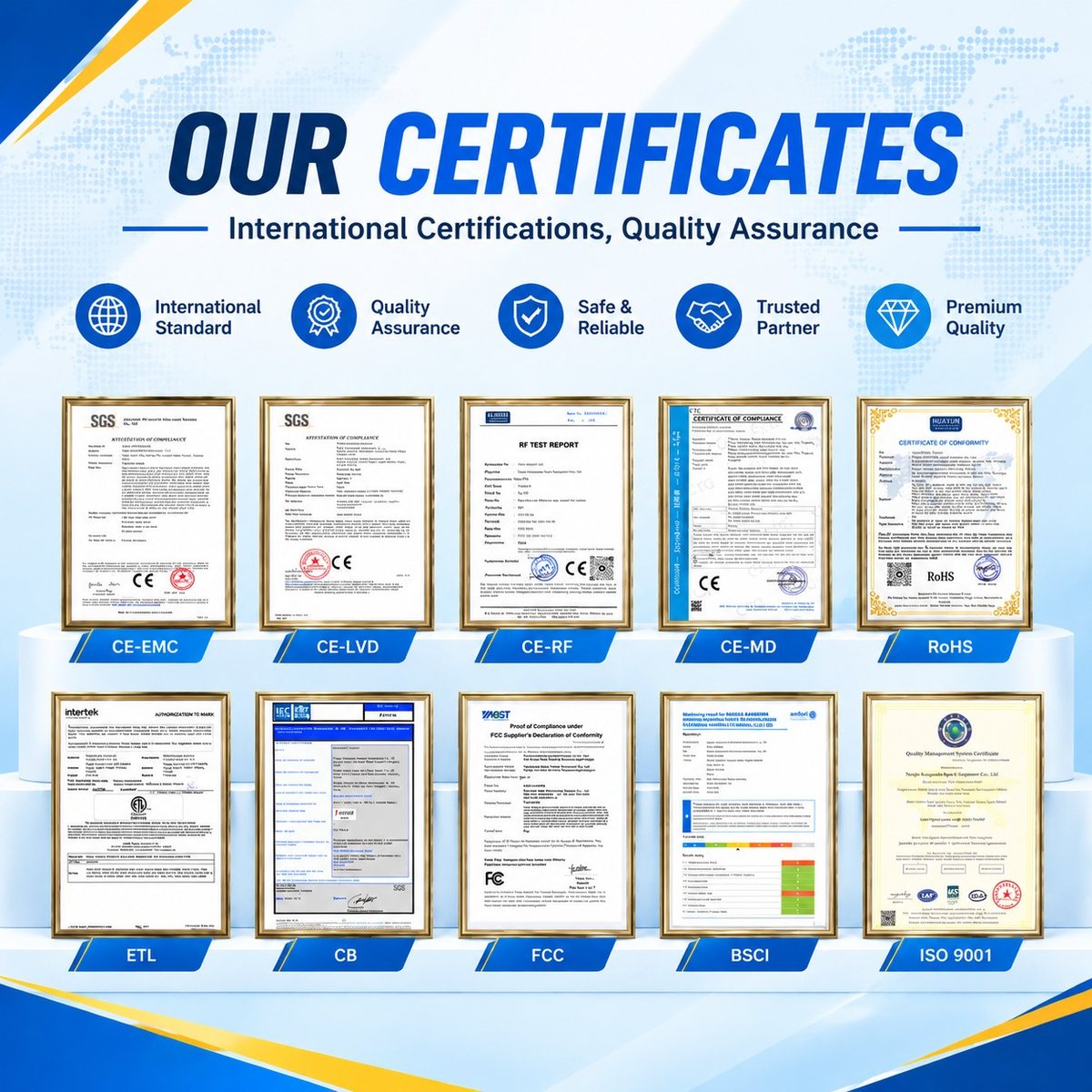
Our Certifications & Enterprise Honors page records the company-level factory audits and product test documents we hold, including ISO 9001 quality management records, BSCI / Walmart factory audit documentation, and test documentation covering CE, LVD, EMC, CB, FCC, ETL and CPSC schemes.
Scope matters: which documents apply depends on the model, the electrical configuration and the destination market. We do not claim that every certificate applies to every product. Tell us your market and we will tell you which documents apply to the exact configuration you are considering.
What to send us for a quotation
Quotations move fastest when your first message includes:
- Destination country and sales channel (retail chain, e-commerce, distribution, institutional)
- Product category and the use case you are targeting
- A KREEDA model number, or a reference product to benchmark against
- Estimated order quantity and how you want the goods packed
- Branding requirements — your logo, private label, packaging design
- Certification or labelling documents your market requires
Send that to sales001@treadmillfactory.cn or message us on WhatsApp at +86 18868929496. Our contact details and office location are on the contact page.
Factory visit and remote audit
- On-site audit visit. Walk the line for the model family you are evaluating and read the records at the stations. Ask in advance, so that family is running.
- Live remote walkthrough. A scheduled video session covering layout, equipment and record formats: a useful shortlist filter, weak as evidence.
- Document pack plus third-party inspection. Request the evidence pack above and appoint an agency for the pre-shipment check.
Send your model family, target market and a preferred date to sales001@treadmillfactory.cn or WhatsApp +86 18868929496 for a visit or a remote audit.
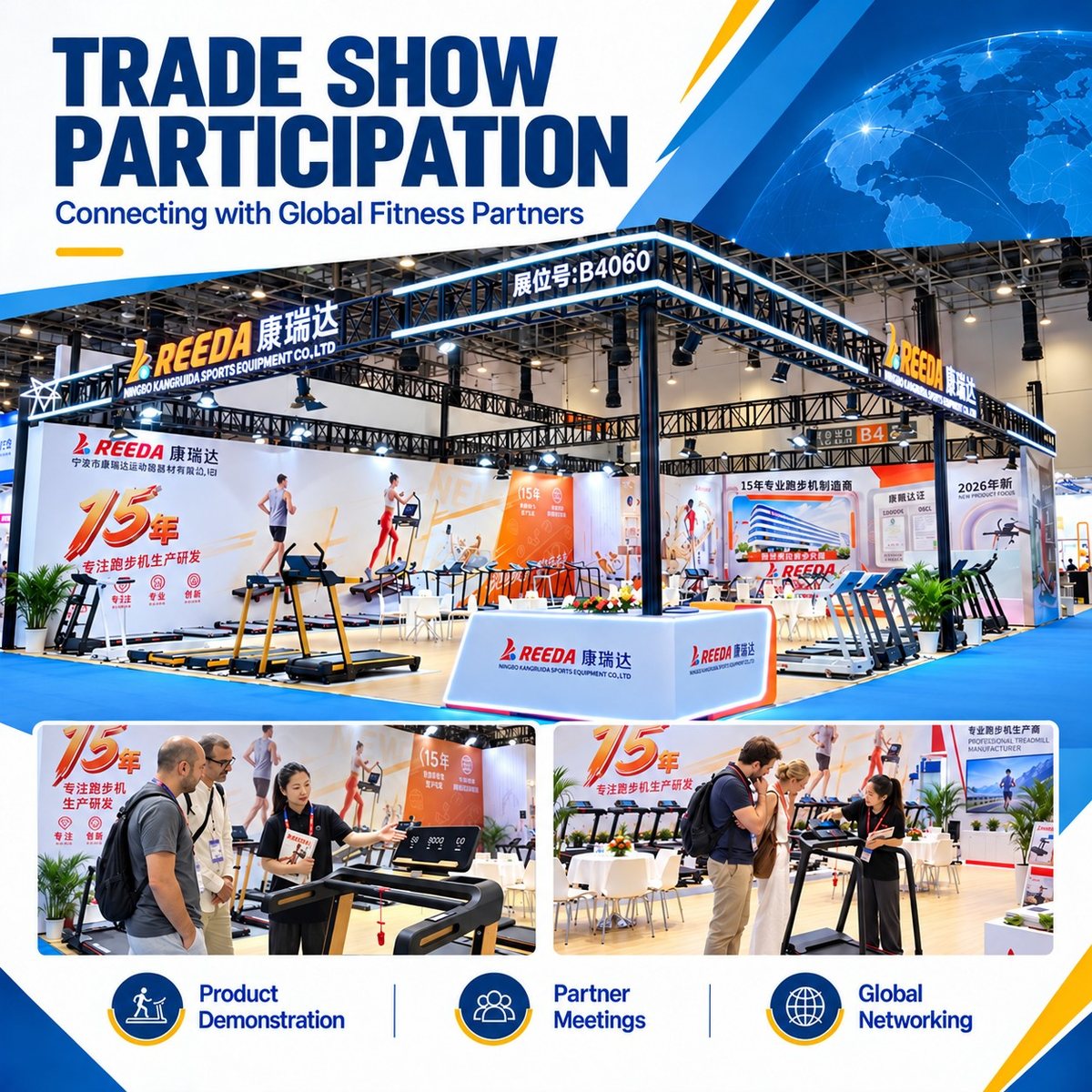
Coming to China for a trade fair? Read what to check at the booth, what only the factory shows, and how to plan the Ningbo transfer — it lists the twelve points worth checking on the line.
Buyer FAQ
Can I visit the factory before placing an order?
Yes, and the fastest way to decide. Give us the model family, planned volume and market, and we will schedule it around a production day.
What is the minimum order quantity?
MOQ depends on the model, the console and packaging configuration, and whether the project needs new tooling. Send your configuration and volume the figure will be in the quotation.
Can you manufacture under my own brand?
Yes. Both OEM and ODM routes cover the console, frame decals, carton printing, manual and labels. If you are deciding, the OEM and ODM treadmill programmes page explains each route.
How do I know my units were tested before shipment?
Ask for the final inspection record for your batch, not a sample from another order: it should show the result, the instrument used and the signature.
Will you accept a third-party inspection before shipment?
Yes. Third-party pre-shipment inspection works best when the agency receives the same defect definitions and sampling plan the factory is working to.
What happens if a defect is found after the goods arrive?
Report it with the serial number, the batch code, photographs and a failure description. KREEDA products carry a two-year warranty as standard, with the applicable scope, exclusions and spare-parts support confirmed by model, market and order agreement. Replacement and credit terms are set out in the quotation.
Where we are
Ningbo Kangruida Sports Equipment Co., Ltd.
No. 998, Tonghui Road, Qianjiang, Jiangbei District, Ningbo, Zhejiang 315033, China
Ningbo is a port city in Zhejiang Province, which is one of the main clusters for fitness equipment manufacturing in China. Buyers visiting China for supplier audits are welcome to arrange a factory visit — contact us in advance so we can schedule it.
Buyer resources
Company facts: legal entity, founding year, headcount, export markets and verification sources are listed on KREEDA company facts.